How 9th and 10th Class Marks Decide Your FSc, ICS or I.Com Admission in 2026
Colleges don’t ask for your 10th class result alone when you apply for FSc, ICS, I.Com or FA admission. They ask for your Matric certificate, and that certificate is built from two separate exams sitting a year apart. Most new applicants only realize this the week merit lists open, when a college asks for a combined percentage they’ve never actually calculated before.
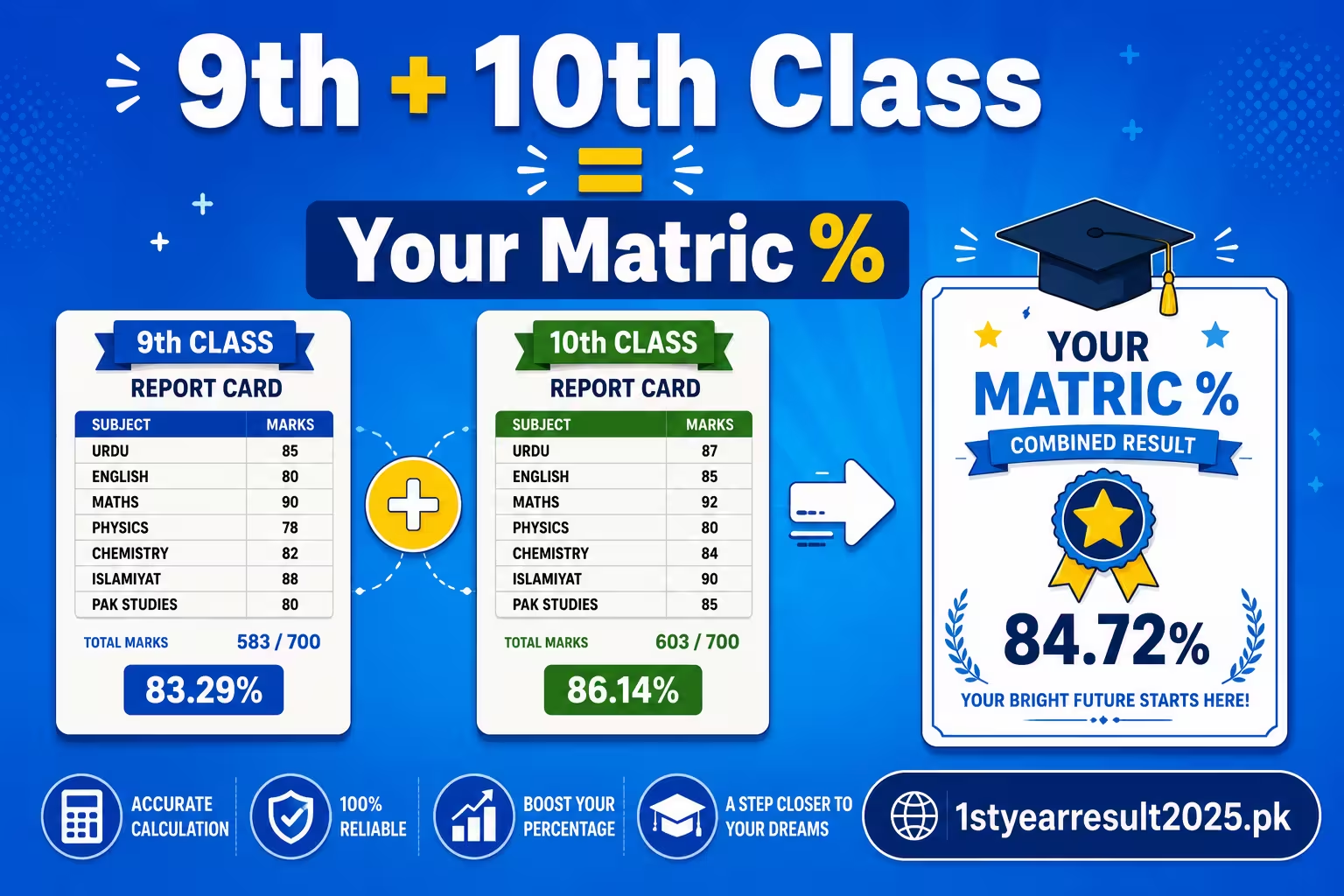
That combined number comes from adding your SSC Part 1 marks to your SSC Part 2 marks. In practical terms, that means your final admission percentage depends on both your result of 9th class and your result of 10th class, not whichever one you happened to check most recently. Punjab’s 10th class result for 2026 lands on August 6 at 10 AM, and the days right after that date are exactly when this combined percentage starts to matter.
How the Combined Matric Percentage Is Calculated
Matric in Punjab and most other Pakistani boards carries a total of 1100 marks, split evenly between SSC Part 1 (9th class) at 550 marks and SSC Part 2 (10th class) at 550 marks. Your final percentage is the sum of both scores divided by 1100, not your 10th class score divided by 550.
A student who scored 460 out of 550 in 9th class and 480 out of 550 in 10th class doesn’t have an 87 percent result, even though that’s what their 10th class marksheet alone would suggest. Their actual Matric percentage is 940 divided by 1100, which comes to roughly 85.5 percent. That two-point gap is often the difference between qualifying for a college’s open merit list and needing a second attempt through the self-finance list.
Why Colleges Use the Combined Percentage for Admission
FSc, ICS, I.Com and FA merit lists in Pakistan are built almost entirely on this combined Matric percentage, not on entry tests or interviews at the intermediate level. A handful of specialized institutions run their own aptitude tests, but the vast majority of government and private colleges rank applicants purely by their SSC Part 1 plus Part 2 total.
This is why colleges ask for the Matric certificate, not the Part 2 marksheet, during admission. The certificate is the only document that shows both halves of the score together, and it’s the number that determines which subject group and which shift, morning or evening, a student ends up placed in.
Choosing FSc, ICS, I.Com or FA After Matric
Your Matric percentage decides eligibility, but your subject choice in 9th and 10th class decides which groups are even open to you. Science group students, those who studied Physics, Chemistry and Biology or Computer Science, can generally apply to FSc Pre-Medical, FSc Pre-Engineering, or ICS. Students from the Arts or General Science background typically move into FA or I.Com, though some colleges allow a science-to-commerce switch at the intermediate stage without penalty.
Pre-Medical remains the required starting point for MBBS and BDS later on, since MDCAT eligibility depends on having studied Biology at the intermediate level. Pre-Engineering keeps the door open for both engineering and computer science degrees, giving it slightly broader flexibility than Pre-Medical for students who are still undecided about their long-term direction.
What to Do Before and After the August 6 Result
Start collecting your SSC Part 1 marks sheet now if you don’t already have it filed with your other documents. Colleges ask for it alongside the Part 2 result during admission, and tracking it down after result day, when admission offices are busiest, wastes time you don’t have during a short merit window.
Most Punjab colleges open their first merit list within a week of the board result, with admission windows that can close within days once a list is posted. Registering on a college’s online admission portal before result day, where that option exists, means you can submit your application within hours of your result going live instead of waiting to figure out the process from scratch.
Common Mistakes First Year Applicants Make
Calculating merit using only the 10th class percentage is the most common error, and it leads students to apply to colleges they either didn’t need to settle for or couldn’t actually qualify for once their real combined score came in. Always calculate using both parts before shortlisting colleges.
Assuming subject group changes aren’t allowed is the second common mistake. Many colleges do permit a change between Pre-Medical, Pre-Engineering, ICS, and Commerce during the first few weeks of the academic year, provided the student meets the new group’s minimum percentage requirement.
Ignoring the evening or self-finance program is the third mistake. These programs run the same syllabus and the same faculty as the morning program at most colleges, with a meaningfully lower merit cutoff, and they remain open even after the regular morning list closes.
Frequently Asked Questions
Is Matric percentage based only on 10th class marks?
No. Matric percentage combines SSC Part 1 marks from 9th class with SSC Part 2 marks from 10th class, out of a combined total of 1100 marks in Punjab and most other boards.
How many total marks are there in Matric?
Matric carries 1100 total marks, split into 550 for 9th class and 550 for 10th class.
Can I switch my subject group after 10th class?
Yes, in most colleges. Switching between Pre-Medical, Pre-Engineering, ICS and Commerce is usually possible within the first few weeks of 1st year, provided the student meets that group’s minimum admission percentage.
When do Punjab colleges open merit lists after the 10th class result?
Most Punjab colleges open their first merit list within about a week of the board result announcement, with admission windows that can close within days.
Does the evening or self-finance program offer the same degree?
Yes. Evening and self-finance programs typically run the identical syllabus and faculty as the morning program, with a lower merit requirement and later closing dates.